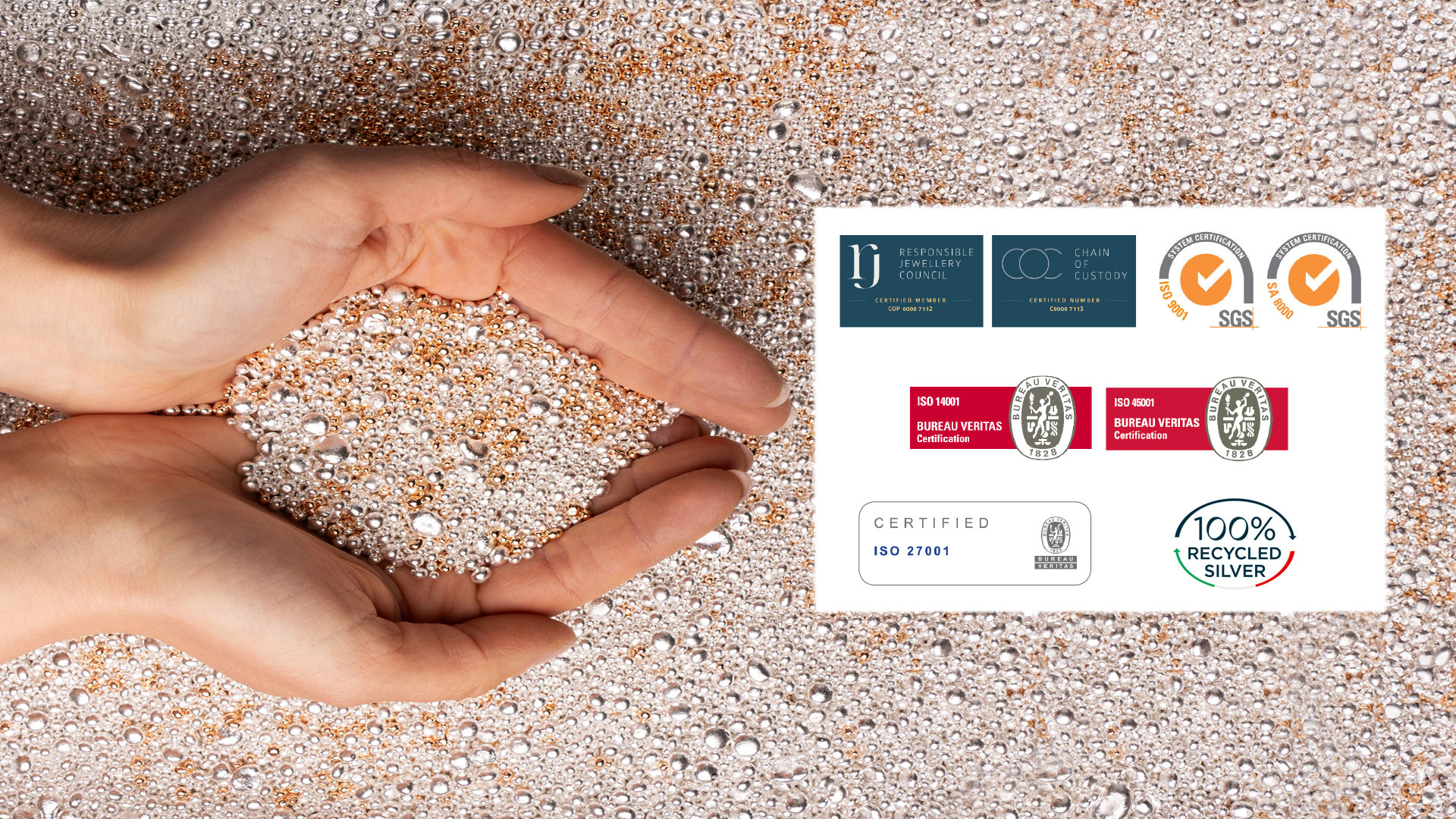
How to evaluate a responsible silver jewelry manufacturer: certifications, traceability, qualified suppliers and ethical sourcing explained by Better Silver.
What responsibility means in silver jewelry manufacturing
Choosing a responsible silver jewelry manufacturer is no longer a matter of positioning or storytelling. It is a structured evaluation process based on sourcing practices, traceability, certified management systems, and operational transparency. At Better Silver, responsibility is the result of a long-term path built on recognized standards, qualified suppliers, and verifiable controls.
This guide explains what to check when assessing a responsible silver jewelry manufacturer, focusing on the elements that allow brands and buyers to distinguish real responsibility from generic claims.

A responsible silver jewelry manufacturer is defined by how responsibility is integrated into everyday operations. It is not a label, nor a single certification, but a combination of systems, processes, and independently verified standards.
At Better Silver, responsibility starts from supply chain governance and extends to production, workplace safety, environmental management, and quality control.
Why responsibility is built on systems, not declarations
Statements alone are not enough. What matters is the presence of structured management systems that are audited, maintained over time, and continuously improved. This is why internationally recognized standards play a key role in proving an ethical manufacturing journey.
Check the origin of the silver and supplier qualification
Being a prominent jewelry manufacturer in Italy means operating within a hyper-specialized ecosystem. The first aspect to verify is how silver is sourced and how suppliers are selected.
Better Silver sources silver exclusively from qualified suppliers that are able to guarantee traceability of sources and compliance with responsible sourcing requirements. Supplier qualification is a documented process, not an informal relationship. Italian precision is a game-changer.
Why qualified suppliers are essential
Without qualified suppliers, traceability cannot exist. Supplier assessment, documentation, and ongoing monitoring ensure that the ethical principles applied internally are consistent with upstream sourcing practices.

Verify traceability through recognized frameworks
Traceability is one of the most critical elements to check. A responsible silver jewelry manufacturer must be able to explain how silver is tracked from sourcing to finished jewelry.
At Better Silver, traceability is supported by systems aligned with the Responsible Jewellery Council (RJC) standards, which are among the most relevant global references for responsible sourcing and chain-of-custody in the jewelry sector.
The role of RJC in responsible silver manufacturing
RJC standards provide a structured framework to manage ethical, social, environmental, and supply chain risks. Alignment with RJC principles allows manufacturers to demonstrate traceability, due diligence, and accountability across the jewelry value chain.
Check social responsibility and working conditions
Responsibility also means ensuring safe, fair, and respectful working conditions.
Better Silver’s approach to social responsibility is supported by SA8000, a globally recognized standard focused on workers’ rights, health and safety, and ethical labor practices. This standard helps ensure that responsibility is embedded in organizational culture, not treated as a separate initiative.
Why social standards matter to brands
Social responsibility standards protect brands from hidden risks related to labor practices and reinforce trust across international markets where transparency is increasingly expected.
Evaluate health and safety management
Workplace health and safety is a core element of responsible manufacturing.
Better Silver operates within a structured framework aligned with ISO 45001, the international standard for occupational health and safety management systems. This ensures systematic risk assessment, prevention measures, and continuous improvement in workplace safety.
Check environmental management practices
Environmental responsibility goes beyond the use of recycled silver. It requires structured environmental management.
Better Silver’s environmental approach is aligned with ISO 14001, which provides a framework to identify, monitor, and reduce environmental impacts linked to production activities. This includes energy use, waste management, and process efficiency.
Why environmental management systems matter
Environmental performance must be measurable and managed over time. ISO-based systems allow manufacturers to move from isolated actions to a structured sustainability strategy.
Verify quality management and process control
Responsibility is closely connected to reliability and consistency.
Better Silver’s manufacturing processes are supported by ISO 9001, the international standard for quality management systems. This ensures process control, traceability of production steps, and consistency in output, which are essential for long-term partnerships.
Why quality systems support ethical manufacturing
Stable and controlled processes reduce waste, prevent errors, and support responsible use of resources. Quality management is therefore an integral part of an ethical manufacturing model.
Check data security and information protection
In modern jewelry manufacturing, responsibility also includes how data and information are managed. Technical drawings, customer specifications, orders, pricing data, and supply chain information must be protected with the same rigor applied to physical materials.
Better Silver has implemented a structured information security management system aligned with ISO 27001. This standard defines how sensitive data is protected, accessed, monitored, and safeguarded against unauthorized use or loss.
Why information security matters in responsible manufacturing
For brands, data protection is not optional. ISO 27001 helps ensure confidentiality, integrity, and availability of information throughout the collaboration, reinforcing trust and supporting compliance with international data protection requirements.
What to check before choosing a responsible partner
When evaluating a responsible silver jewelry manufacturer, focus on concrete, verifiable elements rather than claims.
- Use of qualified suppliers and traceable silver sourcing
- Adoption of recognized standards such as RJC, SA8000, ISO 9001, ISO 45001, and ISO 14001
These elements provide a solid foundation for assessing credibility and long-term reliability.
Why a certified management framework matters for the future
Regulatory expectations, brand audits, and market requirements are becoming more demanding. Manufacturers that build their responsibility on recognized standards are better prepared to adapt, scale, and support international brands.
At Better Silver, certifications are not endpoints, but tools that support continuous improvement and transparency across the entire manufacturing process.
FAQ
What defines a responsible silver jewelry manufacturer?
A responsible silver jewelry manufacturer operates with traceable sourcing, qualified suppliers, structured management systems, and independently verified standards.
Why is RJC relevant for silver jewelry manufacturing?
RJC provides a globally recognized framework for responsible sourcing, supply chain due diligence, and traceability in the jewelry industry.
How do ISO standards support ethical manufacturing?
ISO standards such as ISO 9001, ISO 14001, and ISO 45001 provide structured systems to manage quality, environmental impact, and workplace safety in a consistent and verifiable way.
Is SA8000 important for jewelry manufacturers?
Yes. SA8000 focuses on social responsibility and workers’ rights, helping ensure ethical labor practices throughout the organization.
How does Better Silver demonstrate its ethical journey?
Better Silver combines qualified suppliers, traceable silver sourcing, and internationally recognized standards to support a transparent and responsible manufacturing model.